
Overview
Ticket Fields allow you to capture structured information about customer conversations beyond the standard ticket properties. Create custom fields to track product details, issue categories, resolution metrics, or any data specific to your support workflow.Key Capabilities
- 5 Field Types: Text, Number, Dropdown, Boolean, and Product fields
- AI Auto-Population: Automatically fill fields by analyzing conversation context
- Smart Product Linking: Connect tickets to purchased products from customer orders
- Advanced Analytics: Track field usage, trends, and distribution over time
- Required Field Validation: Ensure critical information is captured before resolution
- Channel-Specific Fields: Show different fields based on communication channel
Getting Started
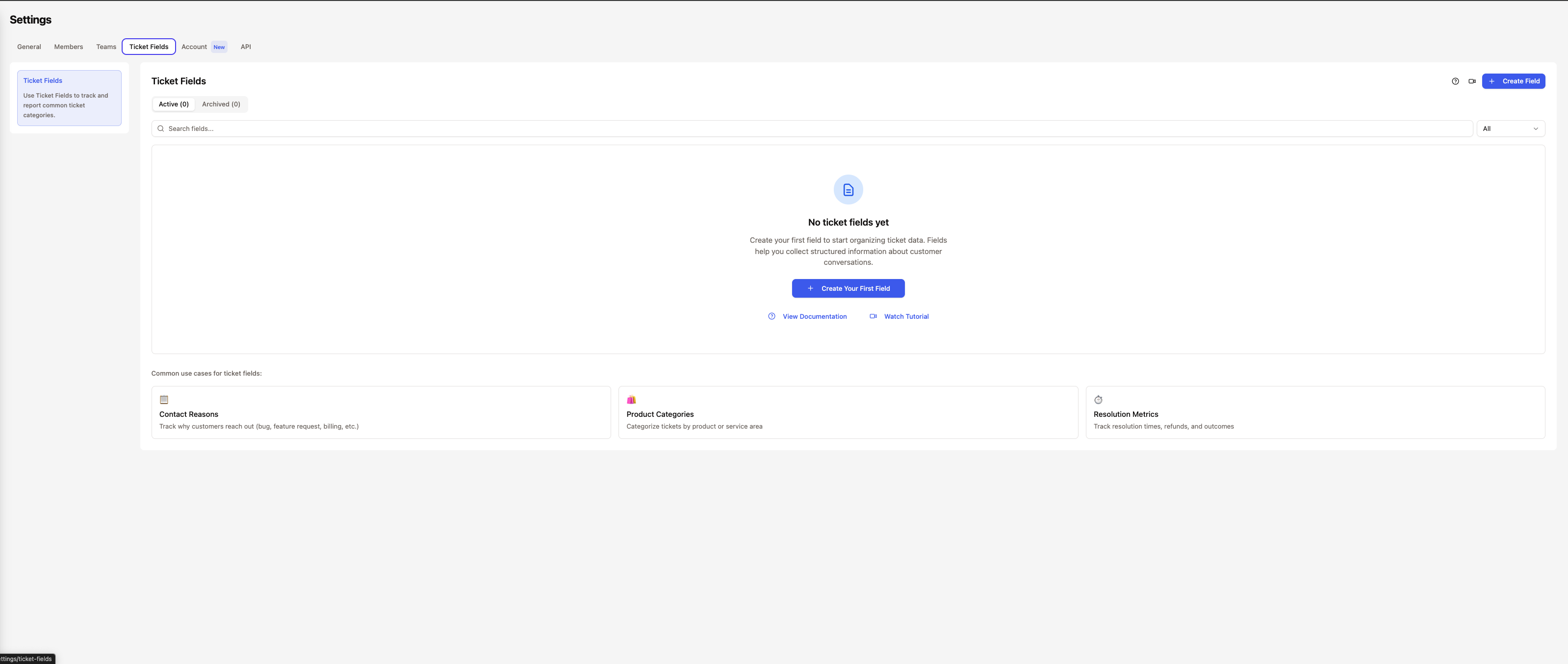
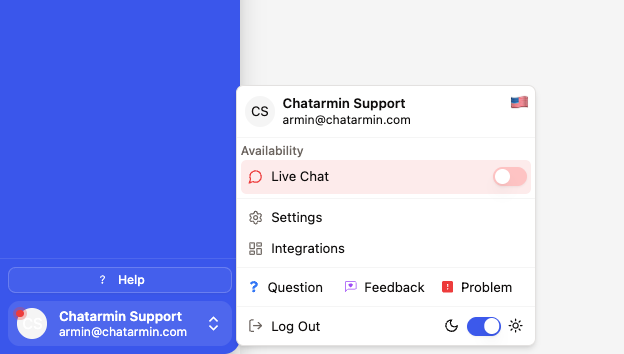
Navigate to Ticket Fields Settings
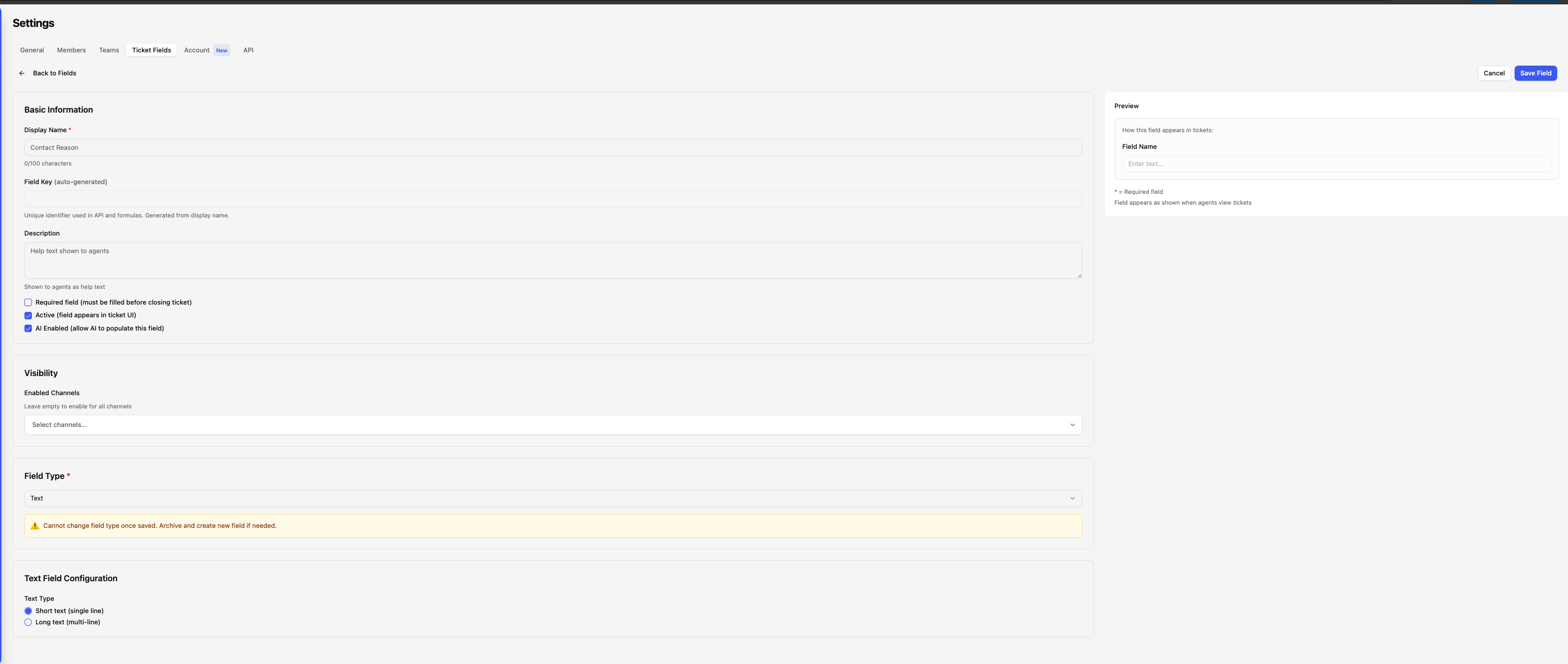
Create Your First Field
- Display Name: How the field appears to agents
- Field Type: Text, Number, Dropdown, Boolean, or Product
- Description: Optional help text for agents
- Channel Availability: Which channels should show this field
Configure Field Options
- Text: Single-line or multi-line input
- Number: Integer or decimal values
- Dropdown: Add custom options with nested hierarchies
- Boolean: Simple Yes/No toggle
- Product: Automatic integration with shop platforms
Enable AI and Required Settings
- AI Enabled: Let AI automatically populate the field
- Required: Must be filled before ticket resolution
Save and Activate
Field Types
Text Field
Capture free-form text input from agents. Configuration Options:- Single-line: For short text like names, IDs, or brief notes
- Multi-line: For longer descriptions or detailed information
- Auto-saves when field loses focus (onBlur)
- Auto-saves when Enter key is pressed
- AI can extract relevant text from conversation
- Customer reference numbers
- Case summaries
- Special instructions
- Tracking IDs
Number Field
Capture numeric values with validation. Configuration Options:- Integer: Whole numbers only
- Decimal: Allows decimal points (e.g., 10.99)
- Auto-saves when field loses focus (onBlur)
- Auto-saves when Enter key is pressed
- Validates numeric input automatically
- Order quantities
- Refund amounts
- Issue severity scores
- Response time targets
Dropdown Field
Single-select dropdown with custom options. Features:- Unlimited custom options
- Nested hierarchies support (e.g., Category → Subcategory → Issue Type)
- Searchable options
- Reorderable options via drag-and-drop
- Saves immediately on selection
- AI selects most appropriate option based on conversation context
- Updates in real-time
- Issue categories
- Product types
- Resolution methods
- Department routing
:: as separator when creating nested options. The system displays them with > for better readability.Boolean Field
Simple Yes/No toggle for binary choices. Behavior:- Saves immediately on toggle
- AI determines true/false based on conversation
- Clear visual indication of state
- VIP customer flag
- Urgent priority indicator
- Refund eligibility
- Warranty coverage
Product Field
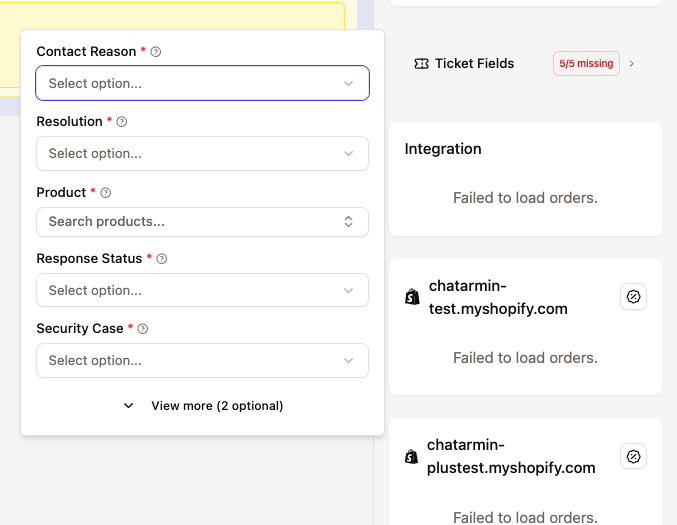
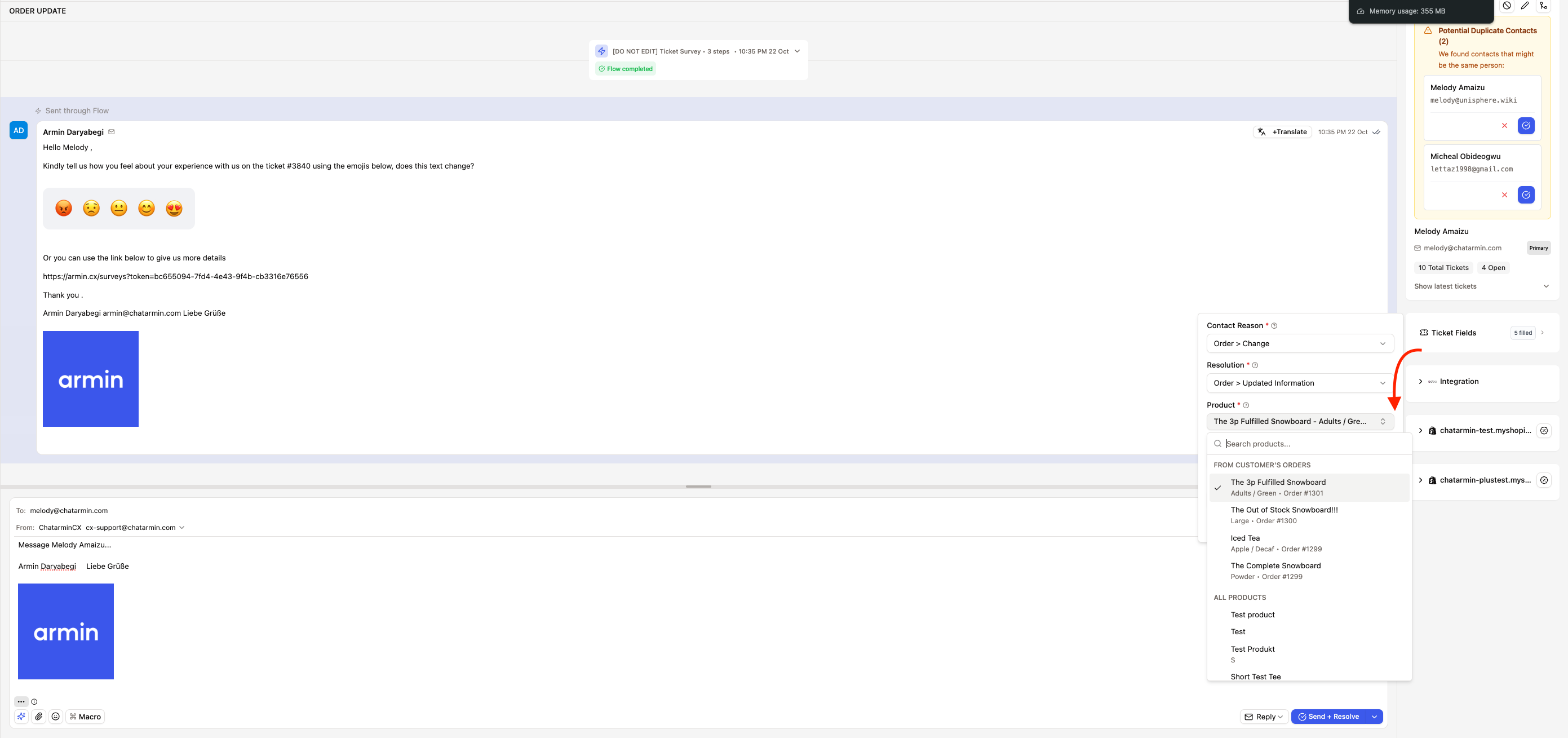
Advanced product selection from customer orders and catalog. Features:- Order Products First: Customer’s recent order products shown at top
- Full Catalog Access: Search entire product inventory
- Variant Support: Select specific product variants
- Order Context: Shows which order the product is from
- Multi-Integration: Works with Shopify, WooCommerce, Billbee, and more
- Searchable interface with two sections:
- From Customer Orders (prioritized)
- All Products (full catalog)
- Shows variants as nested options
- Displays order number for context
- Redis-cached for fast loading (10-minute TTL)
- Analyzes conversation to identify mentioned products
- Cross-references with customer’s order history
- Automatically selects matching product and variant
- Product-specific support tickets
- Warranty claims
- Return/exchange processing
- Product defect tracking
AI Auto-Population
AI automatically populates enabled fields by analyzing ticket context.How AI Analysis Works
Trigger Points
- On Creation: When first customer message arrives
- On Resolution: Retry for missing required fields
Context Analysis
- Customer messages and ticket subject
- Customer’s order history (for product fields)
- Similar resolved tickets (pattern matching)
- Channel-specific context
Confidence Scoring
- High Confidence (>0.7): Value saved automatically
- Low Confidence (<0.7): Field left empty for manual review
Batch Processing
Creation Analysis
When a ticket is created, AI analyzes all AI-enabled fields:Resolution Analysis
When resolving a ticket, AI retries only missing required AI-enabled fields:Smart Review Workflow
When AI cannot fill required fields after multiple attempts, tickets are automatically flagged for manual review.The Process
AI Attempts (3 Retries)
- Attempt 1: Immediate retry (1 second delay)
- Attempt 2: Retry after 2 seconds
- Attempt 3: Final retry after 4 seconds
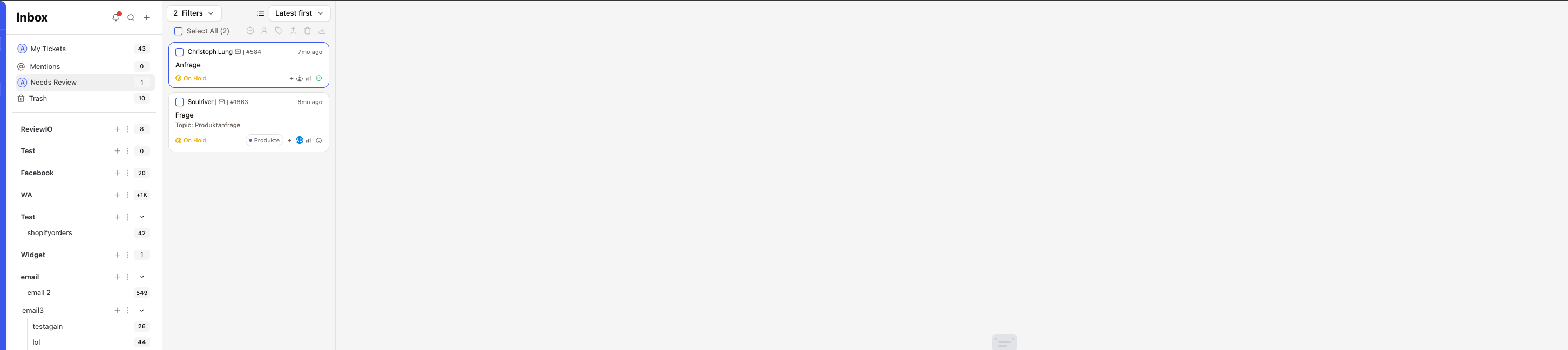
Automatic Status Change
- Status →
On Hold - Sub-status →
Needs Review - Ticket appears in “Needs Review” system view
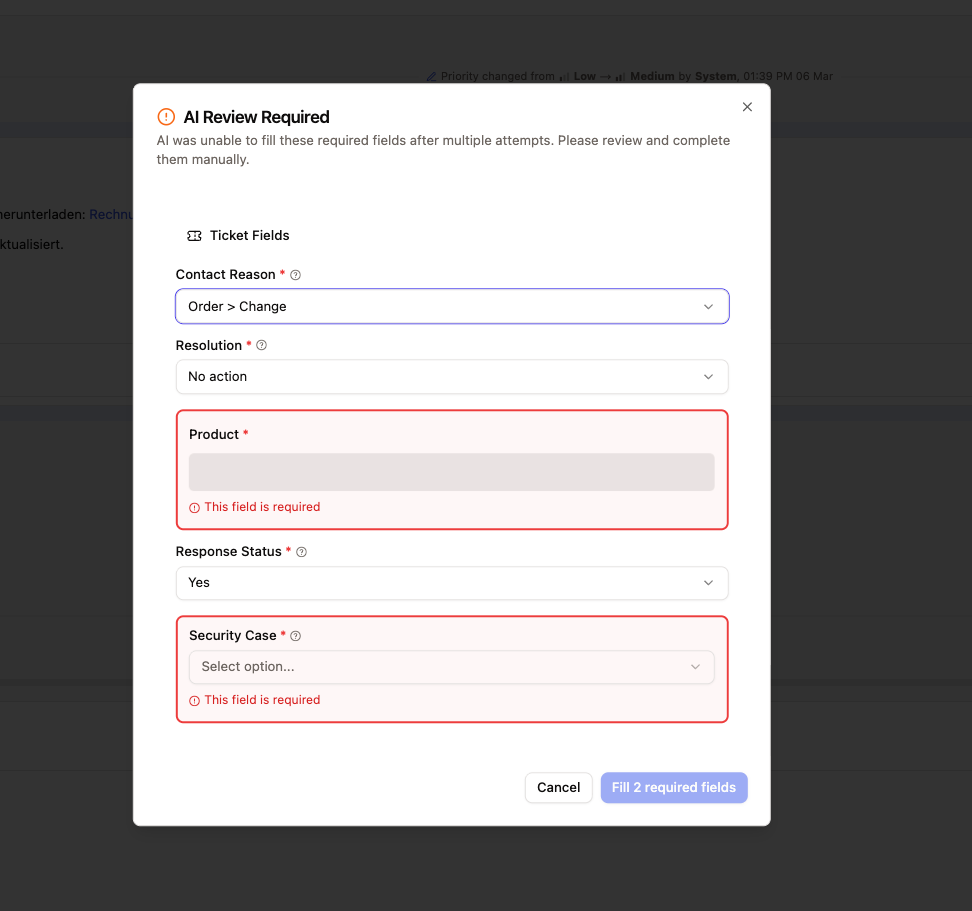
Agent Review
- Missing fields highlighted in red
- Dialog explains which fields need attention
- Agent fills fields manually
- Ticket can then be resolved
Required Field Validation
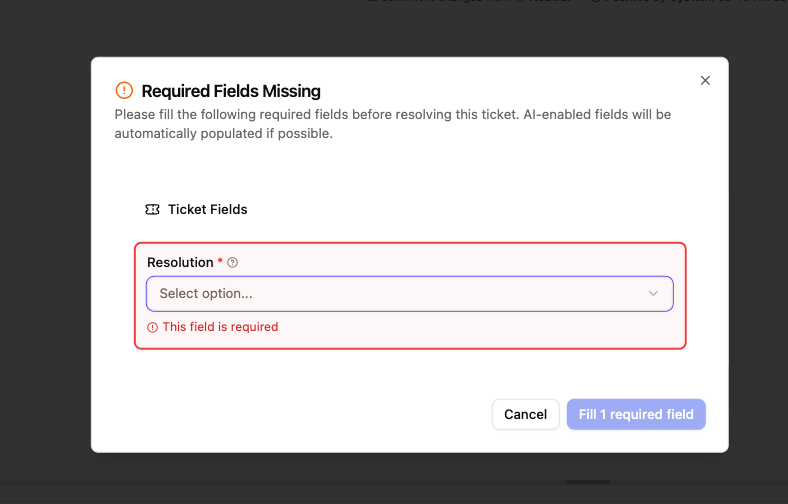
Ensure critical data is captured before ticket resolution.Validation Contexts
Pre-Resolution Validation (Chat Input):- Only checks non-AI required fields
- Assumes AI fields will be populated automatically
- Blocks resolution if manual required fields are missing
- Checks all required fields (AI + non-AI)
- Used when ticket is in
needs_reviewstatus - Shows all missing fields for completion
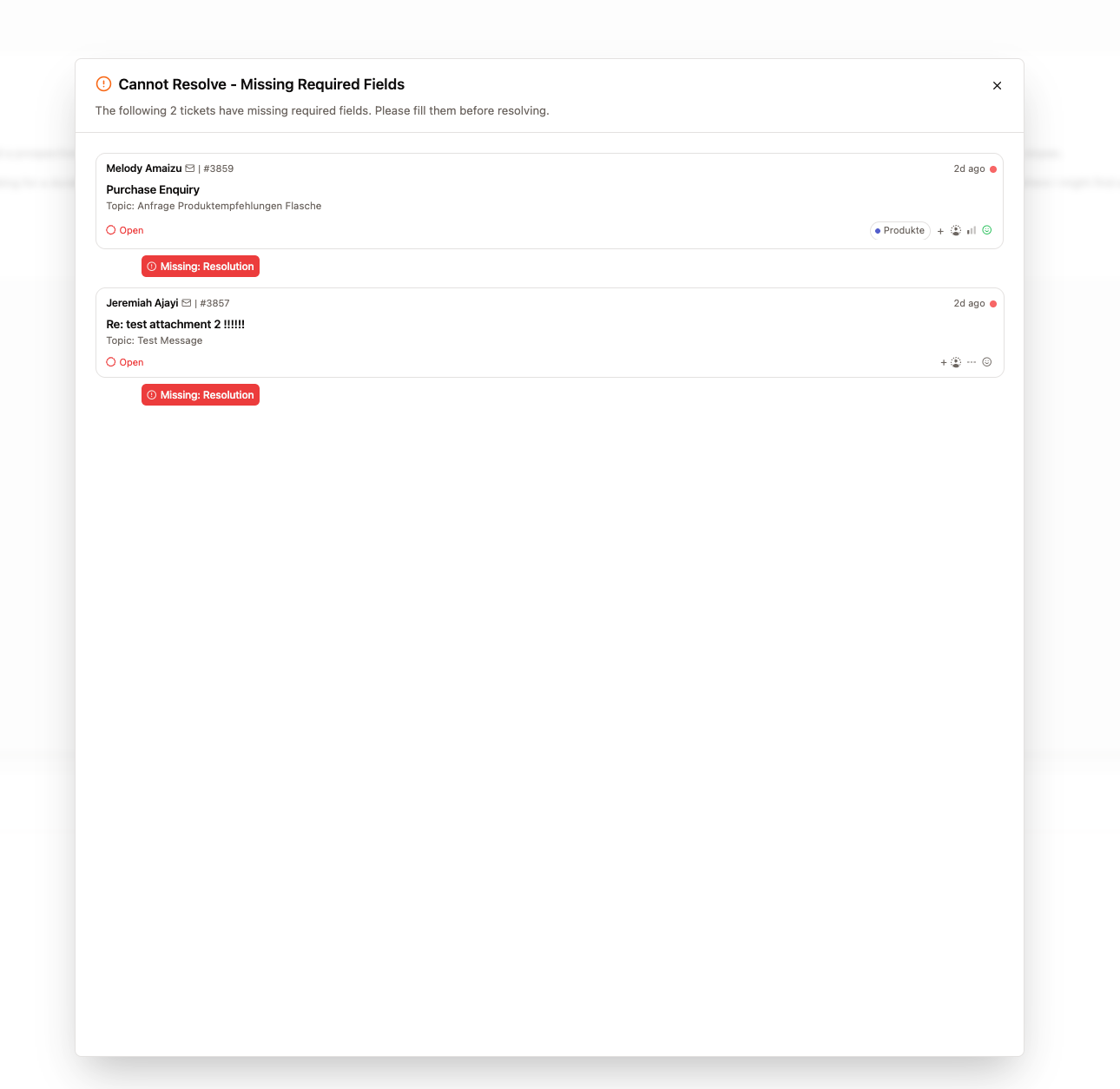
Bulk Resolution Validation
When bulk-resolving multiple tickets:- System checks all selected tickets for missing required non-AI fields
- Blocks resolution if any ticket has missing fields
- Shows preview modal with affected tickets
- Agent can click ticket to fill fields individually
Channel Configuration
Control which fields appear based on the communication channel.How It Works
Each field can be configured for:- All Channels: Field appears on all ticket types
- Specific Channels: Field only appears for selected channels (Email, WhatsApp, Voice, etc.)
Use Cases
Email-Only Fields:- Email domain verification
- Spam classification
- Call duration
- Call quality rating
- Product fields for e-commerce channels
- Order number for shop integrations
Analytics Dashboard
Track field performance and identify trends.Accessing Analytics
Navigate to Dashboard → Ticket Fields to view analytics.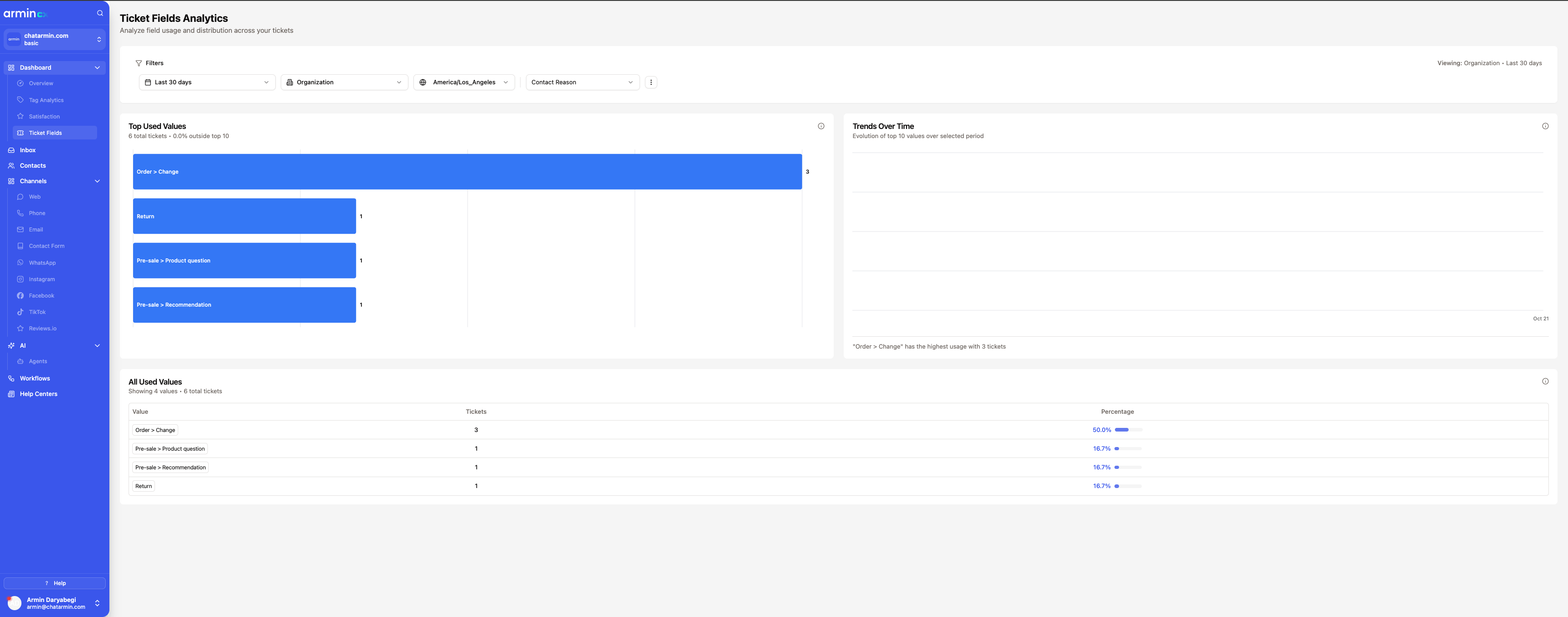
Field Selector
Choose which field to analyze from the dropdown selector.- Shows only active fields
- Groups by field type
- Updates all cards when selection changes
Date Range Filter
Filter analytics by time period:- Last 7 days
- Last 30 days
- Last 90 days
- Custom date range
Data Scope Toggle
Switch between:- All Tickets: Includes tickets without the field set
- Applied Only: Only tickets where field has a value
Top Used Values Card
Horizontal bar chart showing the most popular field values. Features:- Shows top 10 values by ticket count
- Value labels inside bars
- Ticket counts at bar end
- Click any bar to drill down to filtered inbox
- Most common issue categories
- Popular product selections
- Frequent resolution methods
Trends Over Time Card
Multi-line chart tracking value usage over time. Features:- Smooth line chart for each field value
- Color-coded lines for easy distinction
- Hover tooltips showing exact counts
- Footer text highlighting highest-usage value
- Identify seasonal trends
- Track issue type evolution
- Monitor product problem patterns
- Measure category shifts over time
All Values Table
Complete paginated table of all field values. Features:- Sortable columns (Value, Ticket Count, Percentage)
- Search functionality
- Pagination for large datasets
- Click any row to filter inbox by that value
- Comprehensive view of all values
- Easy export and analysis
- Quick navigation to related tickets
Filtering Tickets by Fields
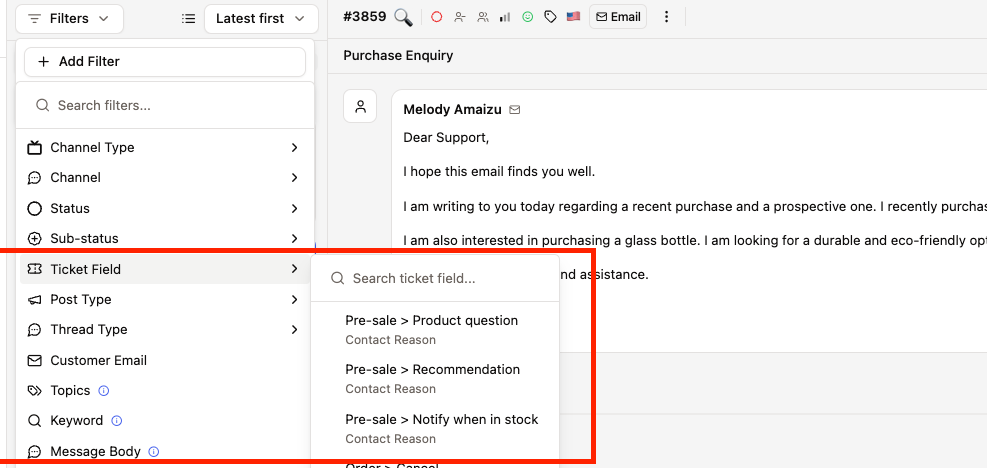
Filter your inbox based on custom field values.How to Filter
Open Filter Menu
Select 'Ticket Field'
Choose Field and Value
- Grouped by Field: All fields grouped with their values
- Search Bar: Quick search across all options
- Multi-Select: Select multiple field values
Apply Filter
Field Management
Active vs Archived Fields
Active Fields Tab:- Currently available fields
- Shown on tickets
- Can be edited or archived
- Previously used fields
- Hidden from tickets
- Can be restored if needed
- Historical data preserved
Reordering Fields
Drag and drop fields to change their display order on tickets. The order affects:- Display sequence in ticket field card
- Tab order for keyboard navigation
- Export/report column ordering
Editing Fields
Click any field to open the configuration panel and modify:- Display name and description
- Field type-specific options (e.g., dropdown values)
- AI enabled status
- Required status
- Channel availability
Best Practices
Field Design
Keep field names clear and concise
Keep field names clear and concise
Use dropdown over text when possible
Use dropdown over text when possible
- Consistent data for reporting
- Easier filtering and analytics
- AI has clear options to choose from
- Prevents typos and variations
Enable AI for repetitive fields
Enable AI for repetitive fields
- Issue categories (can infer from conversation)
- Product selection (can match with orders)
- Priority level (can assess urgency)
- Resolution type (can determine from outcome)
- Internal tracking codes
- Agent-specific notes
- Subjective assessments
Start with fewer required fields
Start with fewer required fields
- Agent feedback on usefulness
- AI accuracy rates
- Actual data usage in reports
AI Optimization
Provide clear field descriptions
Provide clear field descriptions
Monitor AI accuracy
Monitor AI accuracy
- Which fields AI fills successfully
- Which fields often end up in “Needs Review”
- Patterns in AI selections
Use product fields with shop integrations
Use product fields with shop integrations
- Shop integration is active (Shopify, WooCommerce, etc.)
- Customer has order history
- Products have clear names and variants
Performance
Limit total fields per organization
Limit total fields per organization
- Active fields: 10-15 maximum
- Required fields: 3-5 maximum
- AI-enabled fields: 5-8 maximum
- Slow down ticket loading
- Overwhelm agents
- Reduce AI accuracy
Archive unused fields
Archive unused fields
- Archive fields with <5% usage
- Consolidate similar fields
- Remove duplicate or redundant fields
Advanced Features
Conditional Prefetching
Product catalogs are intelligently prefetched:- Only loads when required product field exists on ticket
- Runs in background while agent reads messages
- Cached results available instantly when agent interacts
Real-Time Sync
All field changes sync in real-time via Supabase Realtime:- Agent fills field → Updates immediately for all viewers
- AI populates field → Appears instantly without refresh
- Field configuration changes → Reflect immediately on open tickets
Troubleshooting
Field not appearing on tickets
Field not appearing on tickets
- Field is archived → Check Archived tab and restore if needed
- Field is disabled → Toggle “Active” status in field settings
- Channel mismatch → Check field’s enabled channels include the ticket’s channel
AI not populating fields
AI not populating fields
- Field has “AI Enabled” toggled on
- Ticket has sufficient message context for AI to analyze
- Field type is supported by AI (all types except pure number calculations)
- Check logs for AI confidence scores (may be below 0.7 threshold)
- For product fields: Ensure shop integration is active and customer has orders
Product field shows no products
Product field shows no products
- Shop integration is connected (Shopify, WooCommerce, etc.)
- Customer has order history in the system
- Integration credentials are valid
- Products are synced (check integration settings)
Validation blocking resolution incorrectly
Validation blocking resolution incorrectly
- Normal resolution: Only validates non-AI required fields (AI fields auto-filled)
- Needs review tickets: Validates all required fields (AI failed, needs manual input)
- Check if ticket is in
needs_reviewstatus - Verify field’s “Required” and “AI Enabled” settings
- Ensure field is enabled for the ticket’s channel
Slow product field loading
Slow product field loading
- First load: Fetches from shop API (can take 2-5 seconds)
- Subsequent loads: Uses Redis cache (instant)
- Large catalogs: Products limited to 500 most recent
- Ensure shop integration API is responsive
- Consider reducing product catalog size at integration level
- Check Redis connection health
FAQ
Can I change a field type after creation?
Can I change a field type after creation?
- Create a new field with the desired type
- Migrate data if needed
- Archive the old field
What happens to field data when a field is archived?
What happens to field data when a field is archived?
- Historical values remain in database
- Analytics continue to work for historical periods
- Field just becomes hidden from new tickets
Can customers see or fill custom fields?
Can customers see or fill custom fields?
- Only visible to agents
- Not shown in customer-facing interfaces
- Not included in customer notifications
How does AI handle multiple products in one order?
How does AI handle multiple products in one order?
- Analyzes conversation to identify mentioned product
- Searches customer’s orders for matching products
- Selects specific variant if mentioned
- If multiple matches, chooses most recently ordered